When a parent wants to relocate with children: what to gather
For education only. Not legal advice. Tellbrief is not a law firm.
Whether you are the parent hoping to move or the one who would be left behind, the same facts decide most of the argument. Gather them before the positions harden.
In short
Rules about moving with children vary by state and can depend on the existing parenting order, the proposed move and whether the move crosses state lines. Before making plans, have a lawyer check whether consent or a court order is required and whether any court papers create a response deadline.
On this page
What the lawyer needs to establish
Why the move is happening, in concrete terms: a job, a partner, family support, housing costs. How far it is, in miles and in travel time, because that decides what contact can look like. What the children’s lives are anchored to where they are now: school, family, activities, care. And the state of play between the parents: what has been said, when, and whether anything has been agreed or filed. The rules on moving with children vary by state, including how much notice the other parent must get and how quickly objections must be made, which is why the timeline belongs at the top of the file. In Minnesota, for example, the parent the child lives with may not move the child’s residence to another state except on a court order or with the other parent’s consent, where the other parent has been given parenting time by the decree.1 Where a Minnesota court decides a move, the child’s preference, taking into consideration the age and maturity of the child, is one of the factors the statute lists for the court to consider.1
The move, the ties and the plan
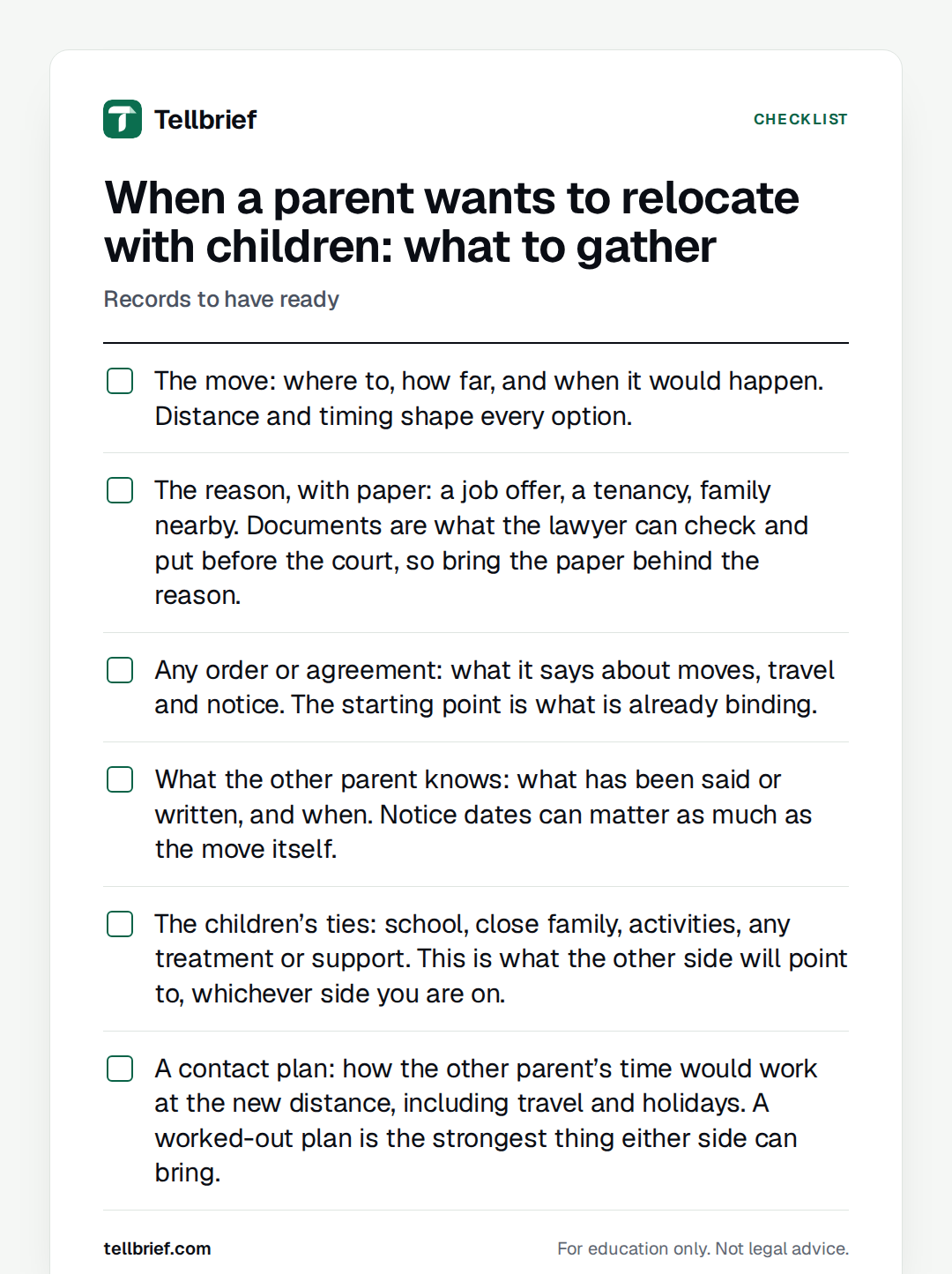
- The move: where to, how far, and when it would happen. Distance and timing shape every option.
- The reason, with paper: a job offer, a tenancy, family nearby. Documents are what the lawyer can check and put before the court, so bring the paper behind the reason.
- Any order or agreement: what it says about moves, travel and notice. The starting point is what is already binding.
- What the other parent knows: what has been said or written, and when. Notice dates can matter as much as the move itself.
- The children’s ties: school, close family, activities, any treatment or support. This is what the other side will point to, whichever side you are on.
- A contact plan: how the other parent’s time would work at the new distance, including travel and holidays. A worked-out plan is the strongest thing either side can bring.
Timing, said plainly
Moves have a habit of acquiring deadlines of their own: a job start, a school term, a lease. Some of those can move and some cannot, and it helps to know which before the meeting. If the other parent has already objected, or papers have arrived, note the dates on them exactly; response times can be short, and court deadlines run from when the papers are served, not from when it suited anyone to read them. In a Minnesota divorce, for example, the respondent has 30 days in which to answer the petition.2
Example: a promotion 300 miles away
Made up for this guide
I have been offered a promotion 300 miles away, starting in September. Our daughter is seven and spends alternate weekends with her dad, who lives ten minutes from us now. I told him by text last week and he said he will “stop it”. Nothing is in an order about moving; our order just sets the weekends. My main question: what do I need to do, and in what order, and what happens if we cannot agree?
Questions to prepare before the meeting
Have a short answer ready for each. “I don’t know yet” is a fine answer.
- Why the move, and what is the evidence for the reason?
- How far, and when?
- What does any order or agreement say about moving?
- What has the other parent been told, and when, and what did they say?
- What are the children’s ties where they are now?
- How would the other parent’s time work afterward?
Questions worth asking your lawyer
- What notice do I have to give, or should I have had, in our state?
- Can the move happen while this is decided, or must it wait?
- What would a judge here want to see from each of us?
- What should I not do or book until we have a plan?
If you would rather answer questions than gather paper, Tellbrief asks them for you, most of them one tap, and it turns your answers into a brief your lawyer can work from. See the family law sample brief to see what the lawyer receives.
Sources
Each quote was checked against its source on November 16, 2026. Laws and guidance can change after that date.
Questions about relocating with children
These answers help you get ready for a lawyer. They don’t say what the law means for your situation, or what you should do.
Can I just move and sort it out afterward?
Moving before getting advice can create problems if an existing order or state notice rule applies. Before making plans, have a lawyer check the order, the notice requirements and any response already received.
The other parent has announced a move. What should I gather?
The same list from the other side: what you have been told and when, the order, the children’s ties here, and how you would keep contact working. Dates of what you were told matter.
Does the children’s view count?
It can, depending on their ages and your state’s approach. Note what they have said, and let the lawyer explain what weight it may carry.
How long do these cases take?
It varies. Fixed dates like school terms can shape what each side asks for, but they do not set the court’s timetable. Ask what the realistic dates are in your court, and plan around them rather than around hope.
Gather the reasons and the dates first
Plain-language questions in the set, most of them one tap, free and with no account. Tellbrief turns your answers into a brief your lawyer can work from, and you keep a copy.